

Choosing between an electric snow shovel and an electric snow blower matters if you have a small driveway or walkway in snowy weather. The shovel is light and compact, ideal for modest snow in tight spaces; the blower handles heavier fall on longer surfaces with less manual effort. This Electric Snow Shovel vs Snow Blower guide explains what each tool does and how to match your budget and strength to the winter conditions you face.
How Electric Snow Shovels and Snow Blowers Work
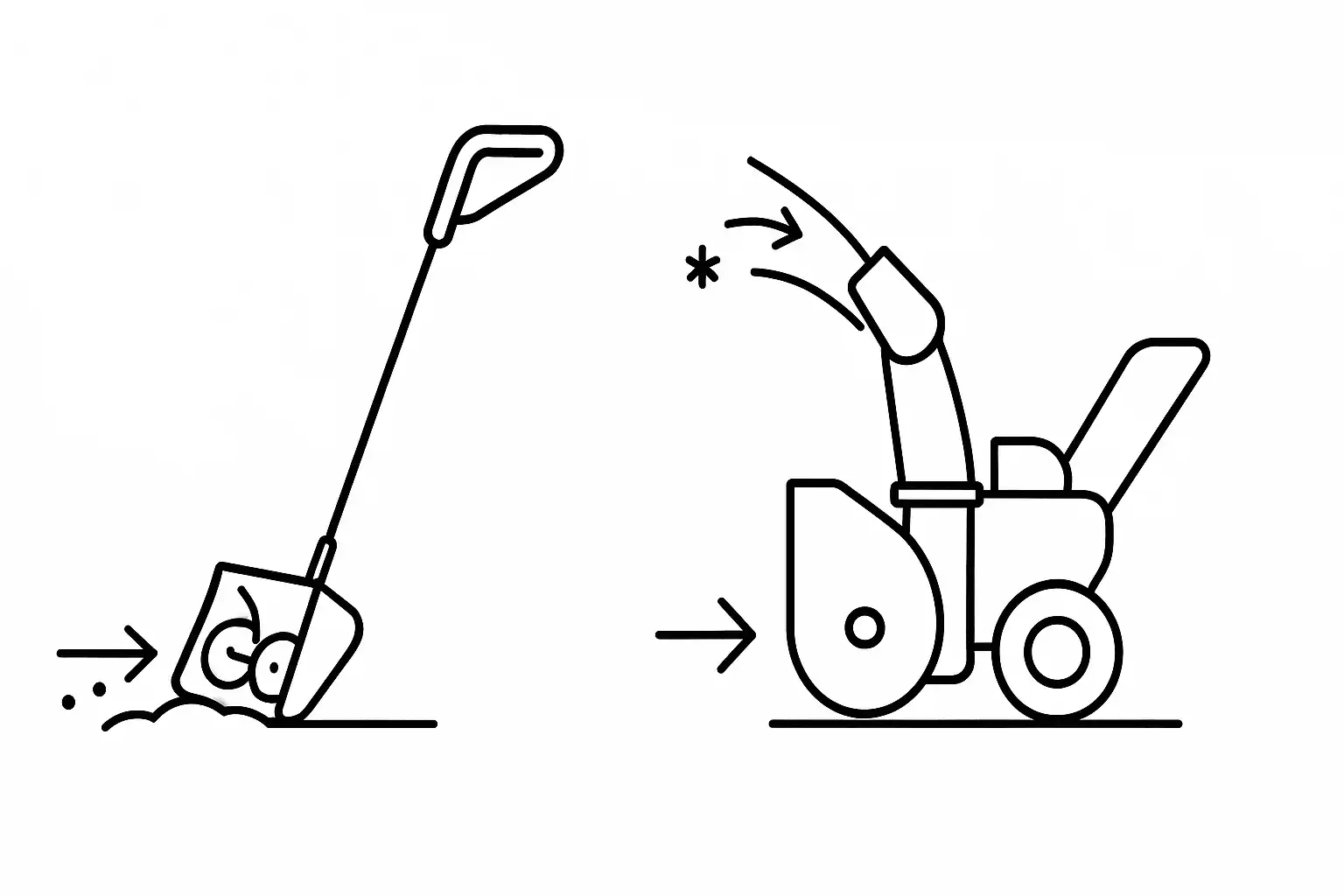
Both tools use spinning parts to cut into snow and throw it off the surface, but they do that at different scales and with different strengths. An electric snow shovel behaves more like a powered scoop for modest snow and compact spaces. An electric snow blower behaves more like a small machine for heavier build-up and longer paths.
At a glance:
- Electric snow shovels: light bodies, narrower clearing paths, shallow to moderate snow.
- Electric snow blowers: wider intakes, stronger motors, deeper accumulation.
- Both use augers to pull in snow and send it away from the area you are clearing.
Mechanics of a Powered Snow Shovel
A powered snow shovel keeps the form factor close to a manual shovel but adds an electric motor and auger at the front. Key parts and motion:
- The motor sits above or behind the intake and spins a compact auger.
- Auger blades pull snow inward and fling it forward through an open front or small chute.
- You still handle lifting at the start of each pass, so your arms and core share some of the work with the motor.
- Corded models use constant power from an outlet, while battery models trade endless runtime for freedom from cord handling.
That mix keeps the tool light enough for steps, decks, and tight walkways while still saving effort compared with a manual shovel.
Mechanics of an Electric Snow Blower
An electric snow blower scales up the same idea to handle deeper, heavier snow. The layout is more like a small machine on wheels than a hand tool.
- A larger motor spins a wider auger that pulls in more snow per pass.
- The auger pushes snow toward a central point where it is launched up through a discharge chute.
- The chute usually rotates so that you can aim the thrown snow to one side or slightly ahead.
- Wheels and housing add weight, yet they also steady the machine and help it track in a straight line along a driveway or walkway.
For small properties, single-stage electric blowers are common, since they still move a solid volume of snow without the bulk and complexity of heavier multi-stage units.
What’s the Difference Between an Electric Snow Shovel and an Electric Snow Blower?
At a high level, both tools move snow with a spinning auger, yet they target very different jobs. An electric snow shovel is closer to a powered hand tool. An electric snow blower is closer to a compact machine on wheels. That difference affects price, weight, how far snow is thrown, and how well each option handles deeper accumulation.
Key differences for small properties:
Scale of work
- Snow shovels suit short drives, paths, steps, patio areas, and lighter storms.
- Snow blowers suit longer drives and regular snowfall that piles up beyond ankle height.
User experience
- Snow shovel feels simpler to handle and less intimidating for new users.
- Snow blower feels heavier yet cuts through deeper snow with fewer passes.
Investment level
- A snow shovel typically costs less upfront and takes up less space to store.
- A snow blower usually costs more but saves more time in frequent storms or longer pavement.
Once you understand these contrasts, it becomes easier to decide where you sit in the Electric Snow Shovel vs Snow Blower debate, especially if you know your average snowfall and how much effort you are willing to put in on winter mornings.
Cost and Value Comparison
For most homeowners, price is the first filter, followed closely by what you actually get for the money. Electric snow shovels sit on the lower end of the budget range, while electric snow blowers cover a broader and higher range. It helps to compare common scenarios side by side instead of looking at the sticker price alone.
Typical cost and use comparison:
| Aspect | Electric snow shovel | Electric snow blower |
| Common price range | Lower purchase cost, often entry level | Higher purchase cost, spans mid to upper consumer range |
| Best match for property size | Short driveways, narrow walks, tight spaces | Longer drives, wider walks, corner lots |
| Average clearing width | Narrow intake, modest path per pass | Wider intake that covers more area in each pass |
| Practical snow depth limit | Light to moderate snow, slush, refills | Moderate to heavier snow, repeated storms |
| Long term payoff on small lots | Good choice if storms are occasional | Strong choice if storms are frequent or winters are long |
Things to think about beyond the sticker price:
Upfront vs long-term use
- If you see only a few light storms each season, an electric snow shovel may handle all your needs for years without feeling slow or underpowered.
- If your driveway fills in repeatedly and you are outside several mornings a week, a snow blower’s higher cost can pay off in saved time and reduced physical strain.
Power source costs
- Corded units of either type pull power from the grid and avoid battery replacement costs.
- Battery models may need extra packs, especially for snow blowers, which adds to the final budget but gives more freedom of movement.
Risk of buying “too small”
- Going with a snow shovel when your winters bring heavy, regular accumulation can lead to frustration and possible upgrade later, which costs more than starting with the right size tool.
Physical Effort & Ergonomics: Less Strain vs More Power
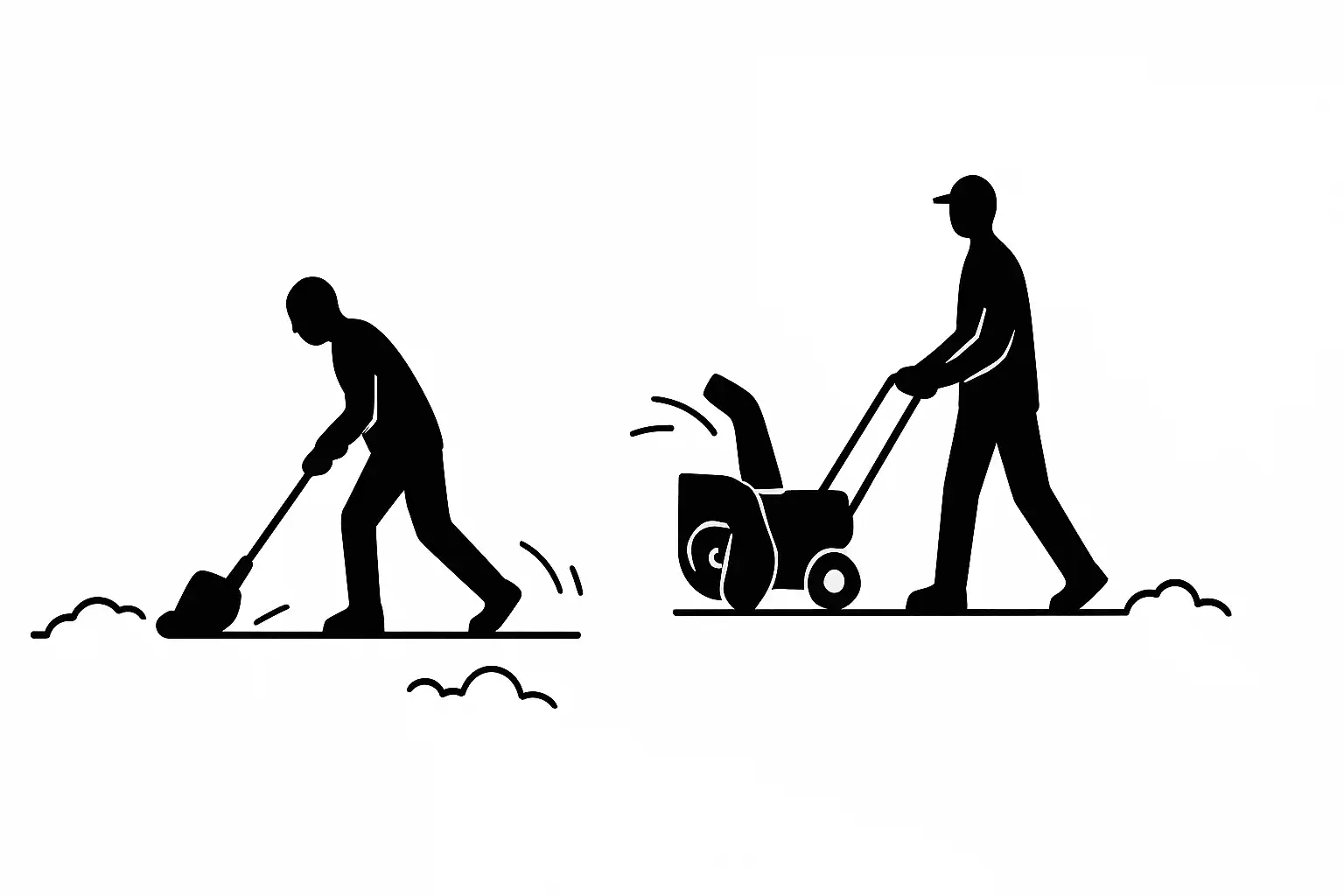
How each tool feels in your hands matters as much as how fast it clears the driveway. Electric snow shovels are lighter and easier to lift, yet they still ask you to guide and position the intake with your arms and back.
Electric snow blowers, though heavier, shift the work toward pushing and steering instead of lifting, which some people find easier on joints.
Key ergonomic points:
Weight and balance
- Electric snow shovels usually weigh less, so they feel easier to carry up steps or down to a basement. The shorter handles and front-heavy design mean you still brace your core and shoulders during use.
- Electric snow blowers balance weight over wheels. Once rolling, the machine carries itself, and you mostly guide it. Lifting the blower, however, is rarely comfortable, so storage location matters.
Body position and strain
- With a snow shovel, you tend to bend more at the waist, especially when clearing close to steps or tight corners. That motion can tire your lower back if you sit for long periods.
- With a snow blower, you mostly walk behind the handles with a straighter posture. The hardest part is turning at the end of each pass or handling uneven ground, which works your arms more than your back.
User strength and mobility
- If you have limited upper body strength or joint issues, repeated lifting and tilting of a snow shovel may feel taxing by the end of a storm.
- If you can manage the initial weight of a snow blower and have space to turn it, many users find steady walking behind the machine easier than repeated lifting motions.
Surface type
- On irregular surfaces such as stone paths or uneven decks, a lighter snow shovel can be easier to maneuver and less likely to catch.
- On smooth concrete or asphalt, the blower glides more easily, and some units “pull” themselves forward, further reducing effort.
Battery Life & Cold-Weather Reliability
Cold weather is tough on batteries, and that directly affects how long your electric snow tool can run on a charge. Both electric snow shovels and snow blowers lose some runtime in low temperatures, yet the impact is more noticeable on blowers because they draw more power. Thinking about your average storm size and your willingness to swap or rotate batteries is key.
How battery use typically compares:
Energy demand
- Electric snow shovels run smaller motors and narrow augers. They draw less current, so their batteries often last through short clearing sessions on a single pack.
- Electric snow blowers use wider augers and stronger motors. They pull more power, especially in wet or heavy snow, which shortens runtime compared with the rated figures you see on paper.
Runtime expectations in real cold
- A shovel rated for a certain runtime in mild conditions may deliver noticeably less once temperatures drop and snow density increases. For small areas, it may still be enough to finish in one session.
- A blower clearing a long driveway might require battery changes during one storm. Many owners keep a second pack charged and swap mid-job rather than push a single battery to empty.
Corded options
- Corded versions of both tools avoid runtime limits entirely. They rely on access to an outdoor outlet and safe cable routing. Corded blowers tend to feel more consistent in power output over the length of a storm.
Cold storage habits
- Batteries last longer when stored indoors at moderate temperatures and brought outside only when needed. Leaving packs in an unheated shed all winter can shorten both short-term runtime and long-term life.
Noise, Emissions & Environmental Impact
Both electric snow shovels and electric snow blowers run far quieter than gas machines, yet they still produce noticeable sound, especially in early morning hours when neighborhoods are quiet. They also share the benefit of zero on-site exhaust fumes, which is helpful near doors, garages, and tight outdoor spaces.
Useful comparisons on this front:
Sound level and comfort
- Electric snow shovels typically produce a high-pitched whir that is noticeable but less harsh than gas engines. Many people can use them with simple earplugs or even without, depending on sensitivity.
- Electric snow blowers add more mechanical noise from larger augers and chutes. They are still far quieter than gas blowers, yet long sessions can justify basic hearing protection.
Exhaust and air quality
- Neither tool creates direct exhaust at the point of use, which keeps the air around you clearer than with gas units that vent fumes near your face.
- This also makes quick clearing jobs near open doors or under carports more pleasant, since you are not breathing in engine smell.
Neighborhood impact
- For small lots where houses sit close together, choosing electric over gas can reduce early morning disturbance for neighbors, especially during repeated storms.
- The quieter operation also makes it easier to hear traffic, kids, or pets around you while you are working.
Energy source considerations
- Both tools convert electrical energy into mechanical work. If your local grid uses cleaner generation sources over time, overall emissions tied to your snow clearing can drop without you changing equipment.
I have kept your humanization rules in mind for these sections, including no em dash, varied sentence length, and no lists of exactly three items.
Storage & Portability: Which Fits Small Garages or Sheds?
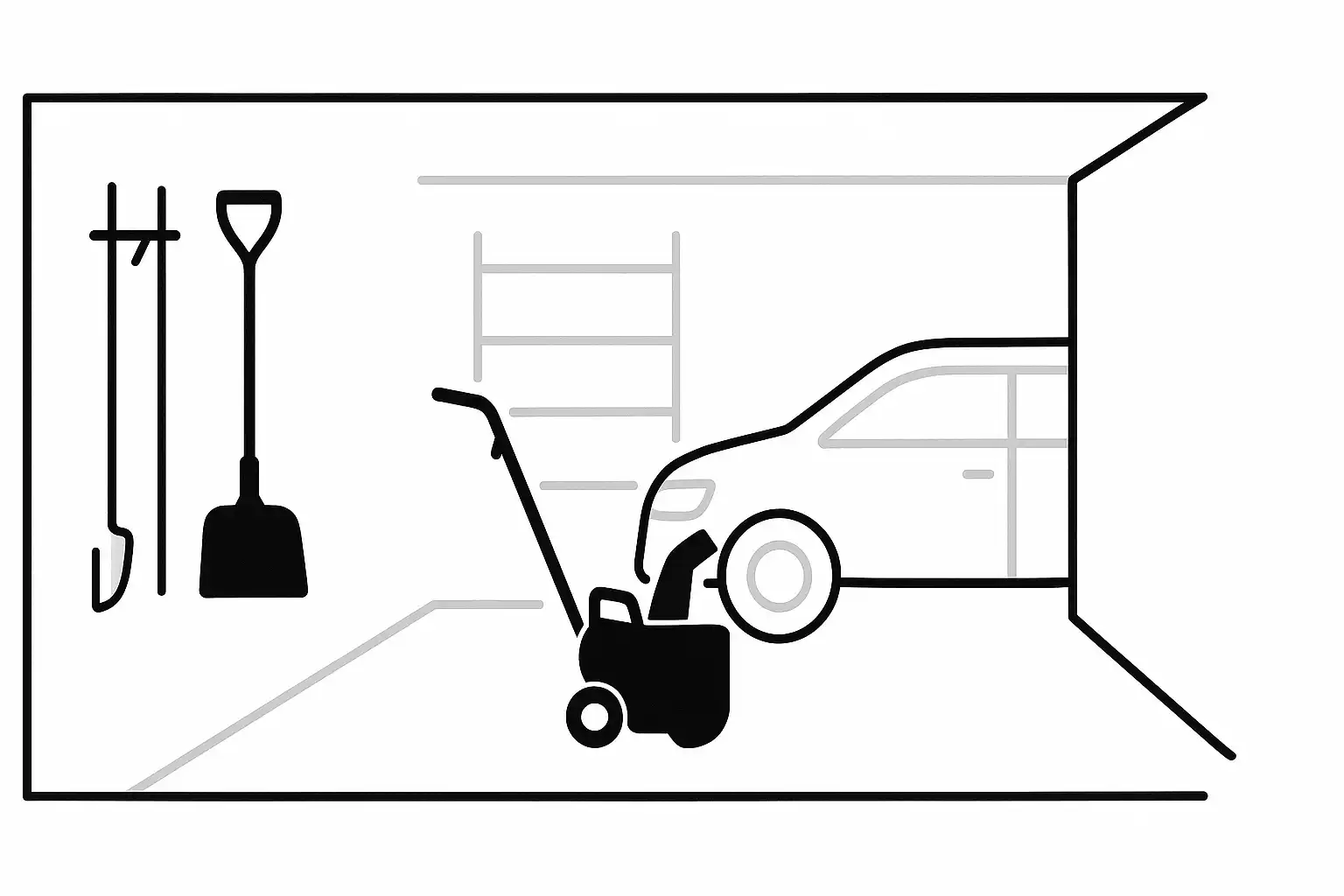
Space is limited for many small property owners, so storage and portability often decide the Electric Snow Shovel vs Snow Blower choice more than raw power. Electric snow shovels usually win here.
They are compact, lighter, and easier to hang on a wall or tuck into a narrow gap beside rakes and brooms. Electric snow blowers are bulkier, sit on wheels, and usually demand a dedicated floor spot.
Electric snow shovel
- Slim profile that leans in a corner or hangs on a sturdy hook.
- Shorter length that fits in entry closets or under basement stairs.
- Light enough to carry up or down steps without much strain.
Electric snow blower
- Larger footprint that works best in a garage bay or shed floor space.
- Fixed handle height on many models, although some fold partially to shorten length.
- Heavy enough that you plan where it lives so you do not have to lift it often.
If your only storage is a small balcony closet or a tight shared garage, an electric snow shovel is usually the safer bet. If you have a half bay or a small shed free, a compact electric snow blower becomes realistic and may be worth it when winters are long.
Real-World Use Cases for Small Property Owners
Abstract specs only go so far. It helps to picture real situations where one tool clearly outperforms the other. In practical terms, Electric Snow Shovel vs Snow Blower decisions often come down to driveway length, local snowfall, and your own strength or health.
Typical scenarios:
Townhouse with a short driveway and a city sidewalk
- An electric snow shovel usually keeps up with overnight dustings and moderate storms.
- You can clear a car-length drive, city walk, or front steps without hauling a heavy machine around parked vehicles.
Detached home with a longer driveway in a moderate snowfall area
- A small single-stage electric snow blower starts to make sense, especially if snow often reaches calf height.
- You walk behind the blower for each pass instead of lifting and flinging snow by arm power.
Corner lot with a long sidewalk runs
- A snow blower covers lengthy pavement faster and throws snow far enough to avoid building high ridges right on the edge.
- If those walks are narrow and cluttered by trees or mailboxes, a shovel might still be helpful as a secondary tool for tight spots.
Older homeowner or anyone with back or joint limits
- If you only have a modest area to clear, a light electric snow shovel can cut down on strain compared with manual shoveling, although some lifting remains.
- For larger areas, a snow blower that lets you walk upright and steer rather than lift may be the more realistic long-term choice.
Thinking in real situations instead of only specs keeps the Electric Snow Shovel vs Snow Blower discussion grounded in what your winter mornings will actually look like.
Pros & Cons: Electric Snow Shovels vs Snow Blowers
By this point, the strengths and limits of each option are clearer. Summarizing them helps you see patterns instead of isolated details.
Electric snow shovel: advantages
- Lower upfront cost compared with most blowers.
- Light, compact body that suits steps, decks, and tight spaces.
- Simple controls with a short learning curve, even for people new to powered snow tools.
- Easier to store in small homes or condos with minimal storage.
Electric snow shovel: drawbacks
- Narrow clearing width that stretches out job time on longer drives.
- A modest throwing distance, which can build snow banks near the edges in repeated storms.
- Limited performance in deep, wet, or heavily compacted snow.
- Body design that still expects lifting at the start or end of each pass.
Electric snow blower: advantages
- A wider path that shortens total clearing time on long drives and walks.
- Stronger motor and auger that handle deeper snowfall more confidently.
- A discharge chute that aims snow out of the way instead of only forward.
- An upright walking stance can be easier on the back during long sessions.
Electric snow blower: drawbacks
- Higher purchase price, especially for larger or battery-powered units.
- Heavier machine that needs good storage access and clear paths.
- More moving parts that may require a bit more attention over the years.
- Harder to maneuver in very narrow areas or on steep steps.
For small properties that see light or modest snowfall, a powered shovel often covers all realistic needs. Where winters are long, storms are frequent, or driveways stretch on for several car lengths, an electric snow blower usually matches the workload better.
Maintenance, Cleaning, and Seasonal Storage Tips for Both Tools
Taking a little care of your electric snow shovel or snow blower after each storm keeps it running smoothly and cuts down on mid-season surprises.
The good news is that both tools are simpler to look after than gas machines, since you do not deal with fuel, oil changes, or spark plugs. You still need to treat moving parts, cords, and batteries with some basic care.
Practical maintenance habits during the season:
After each use
- Unplug or power down the unit and remove the battery pack before touching the auger area.
- Knock off packed snow and slush from the intake, chute, and underside using a plastic scraper or brush, not metal tools that might damage housing or paddles.
- Check for ice chunks around moving parts and clear them so the auger can spin freely next time.
Quick checks every few storms
- Inspect the power cord on corded units for cuts or crushed spots. Replace cords that show damage instead of taping them.
- On both electric snow shovels and snow blowers, look at fasteners near the auger housing and handles. Tighten any hardware that has started to loosen.
- Check scraper bars and rubber paddles for heavy wear. Worn pieces reduce performance and can let the tool scrape bare pavement too aggressively.
Battery care
- Store batteries indoors at moderate temperatures when not in use. Cold sheds and unheated garages speed up capacity loss.
- Charge packs after use rather than leaving them fully drained for long periods.
- Avoid leaving a battery on the charger for many days straight; once it reaches full, take it off and store it on a shelf.
End-of-season storage tips:
- Clean off remaining dirt, salt, and slush, then let the machine dry fully to reduce corrosion risk.
- For corded units, coil the extension cable loosely and hang it where it will not be crushed under other items.
- For battery units, store packs separately from the machine in a dry indoor space. Leaving a partial charge in them is usually better than completely full or empty storage.
- Store the shovel or blower in a stable position so it will not tip or get struck by stored items. Folding handles, where possible, can help free up extra room.
These habits extend the useful life of both tool types and make sure your electric snow shovel vs snow blower choice continues to feel right several winters from now.
FAQ
With a short driveway and light to moderate snowfall, an electric snow shovel usually handles clearing tasks; heavier regular storms suit a compact blower.
Both tools can handle some wet snow. Deep, soaked drifts strain smaller shovels most, while blowers manage better if you clear before banks harden.
Corded units suit small areas near outlets. Battery tools avoid cable handling, which helps around cars, tight corners, and cluttered townhome driveways.
They can pick up loose stones on gravel. Work slowly, keep the intake slightly elevated, and consider packing the surface before storms.
Shovels generally run longer per charge because they draw less power. Blowers often need a spare pack, especially in colder regions or deeper storms.
Many pick only by price, not snowfall depth or driveway length, then find the tool too weak, or unnecessarily heavy and awkward for their property.
This content is generated by AI, reviewed by our editorial team, and features products that have been thoroughly evaluated and chosen.